Sustainable Agriculture and Biological Control
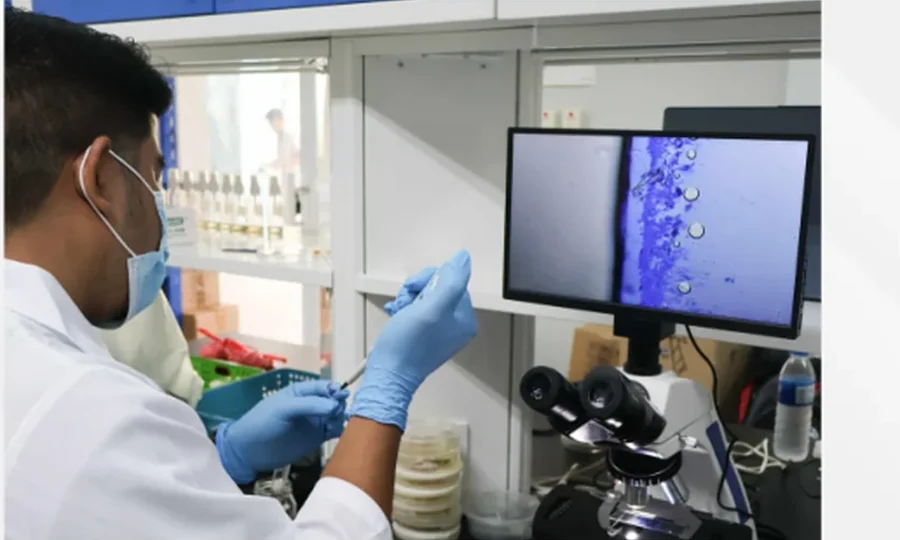
BiPSU researchers investigated entomopathogenic fungi as a potential environmentally responsible approach to managing abaca aphids that transmit Abaca Bunchy Top Virus.
SDG 2 · SDG 9 · SDG 15
Institutional reporting and documentary evidence on sustainability, responsible governance, research innovation, inclusive education, and community resilience.
This public evidence portal supports access to BiPSU's sustainability initiatives and their connections to the United Nations Sustainable Development Goals (SDGs).
This recovered institutional document provides evidence of selected BiPSU activities in sustainable agriculture, community resilience, governance, innovation, and inclusion during the 2025 reporting period. The original evidence compilation was prepared for UI GreenMetric, under Governance and Digitalization, indicator 7.6.
View 2025 Sustainability Report (PDF)Hosted on Google Drive; opens in a new tab. Original historical report reference preserved.
Selected initiatives described in the 2025 institutional evidence compilation. SDG associations are thematic mappings to help readers explore relevant sustainability initiatives.
BiPSU researchers investigated entomopathogenic fungi as a potential environmentally responsible approach to managing abaca aphids that transmit Abaca Bunchy Top Virus.
SDG 2 · SDG 9 · SDG 15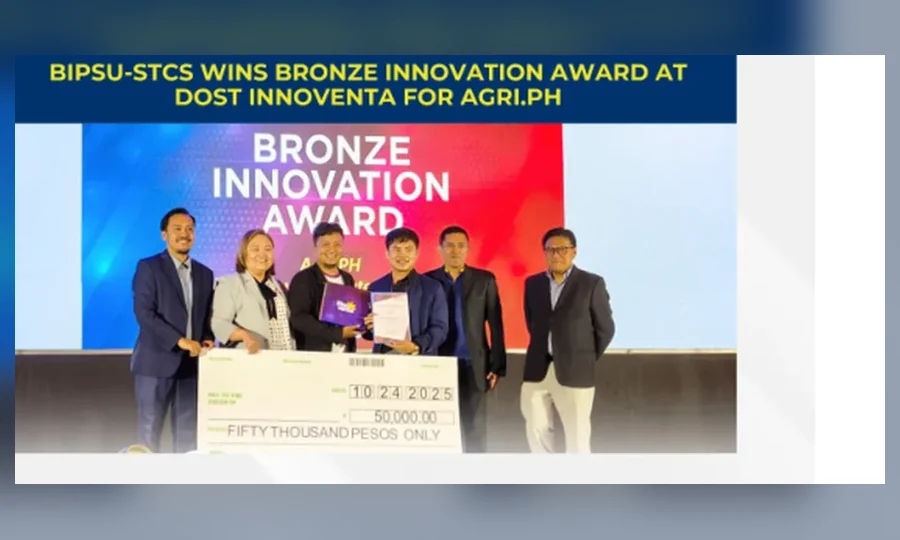
Faculty innovators developed a farmer-oriented platform featuring agricultural e-commerce and crop-disease detection. The project received a Bronze Innovation Award at DOST Innoventa.
SDG 2 · SDG 9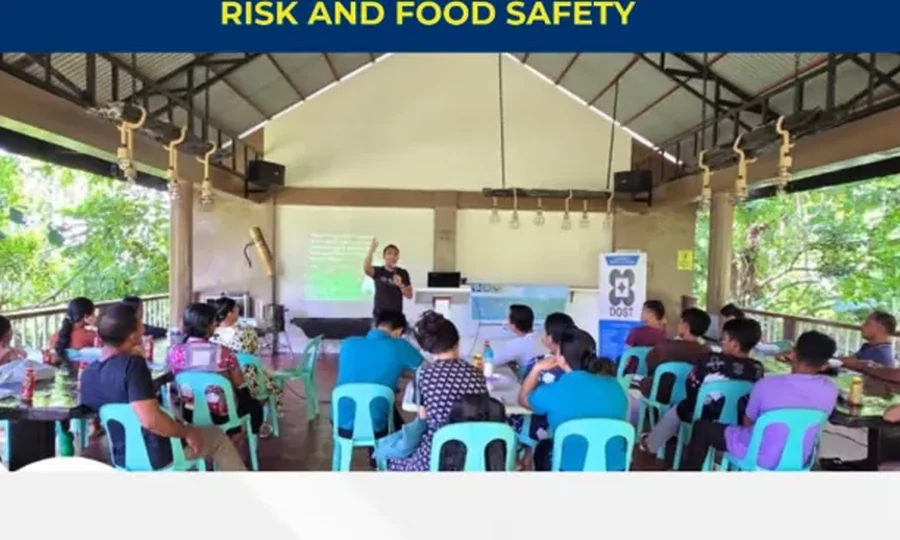
Through its CEST initiative and collaboration with DOST-PSTO Biliran, BiPSU supported community training in climate risk management, disaster preparedness, and food safety.
SDG 11 · SDG 13 · SDG 17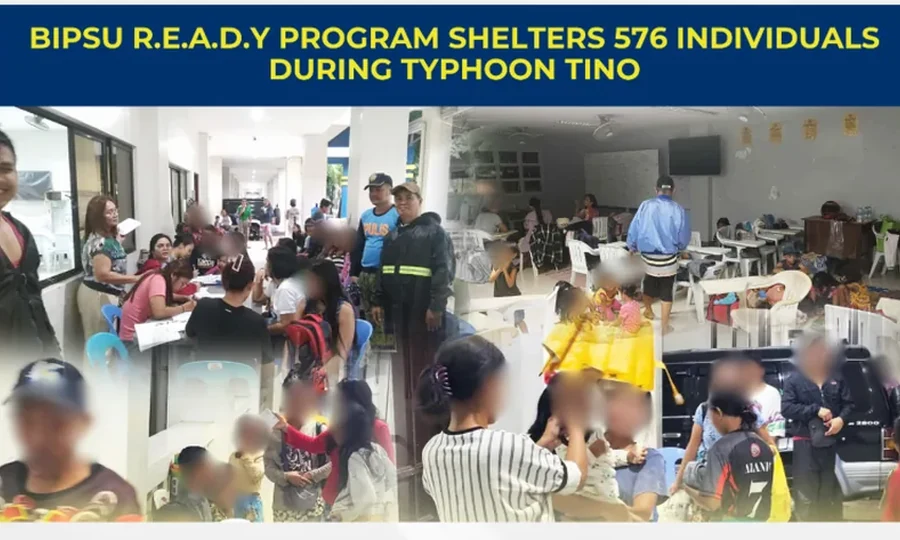
BiPSU's R.E.A.D.Y. response program provided temporary shelter for 576 individuals from 132 families during Typhoon Tino, according to the 2025 evidence report.
SDG 3 · SDG 11 · SDG 13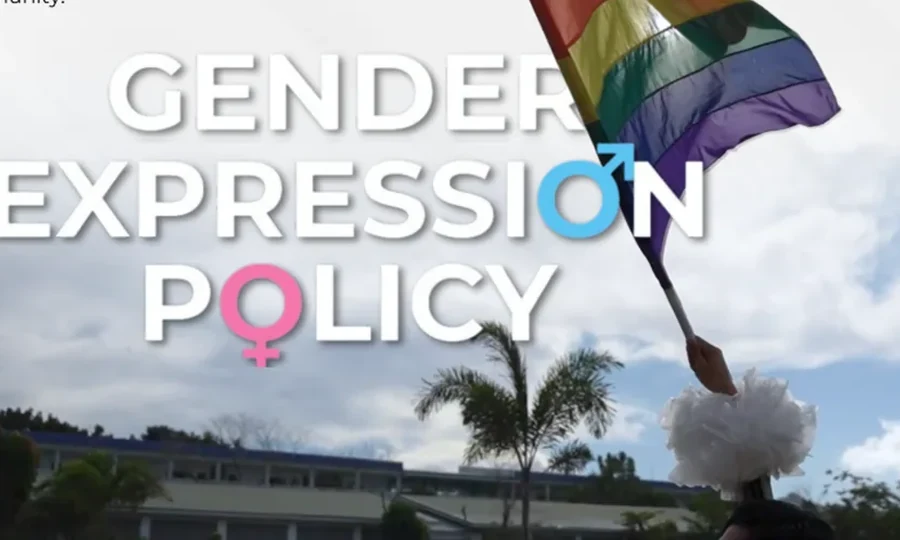
The report documents BiPSU initiatives supporting students' affirmed gender identities and a more inclusive learning environment.
SDG 5 · SDG 10 · SDG 16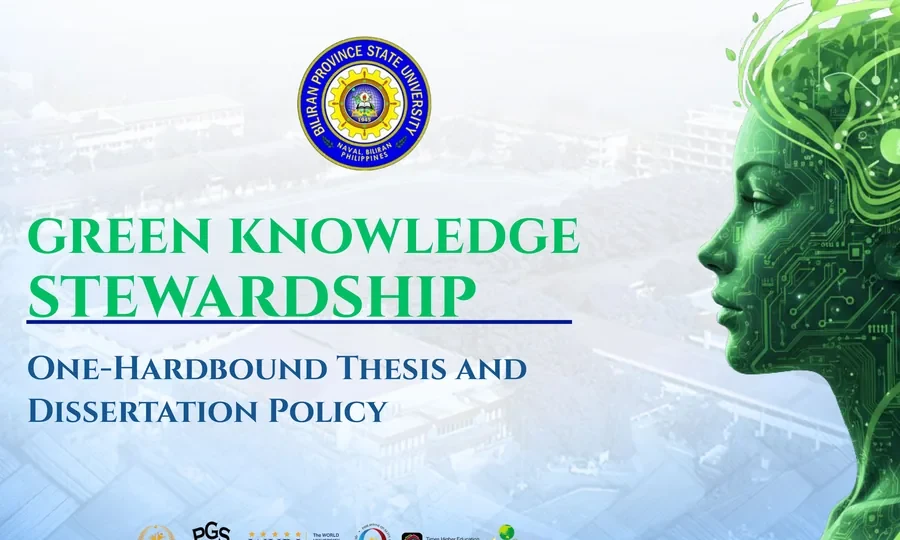
The university's Green Knowledge Stewardship initiative connects reduced thesis printing with digital archiving, resource efficiency, and student-centered academic procedures.
SDG 4 · SDG 12 · SDG 13 · SDG 16The One-Hardbound Thesis and Dissertation Policy is designed to retain one printed archival copy while replacing other required physical copies with digital submission. Its supporting research models the environmental potential of reduced thesis and dissertation printing.
The resources below are publicly accessible original or supporting documents. Their publication and activity periods should be considered separately when evaluating annual institutional performance.
Research by Victor C. Cañezo, Jr. and Ruffy M. Rodrigo, including institutional, regional, and national modeling scenarios.
Open the research manuscript (PDF)Policy briefing describing institutional objectives, supporting studies, environmental implications, and digital archiving.
Open the policy briefing (PDF)These reporting periods were present in the recovered historical Sustainability Report page. A report is linked only where a publicly accessible document has been verified.
No report document is currently linked in the recovered historical page for this reporting period.
The 2025 report is available in the featured document section above.
No report document is currently linked in the recovered historical page for this reporting period.